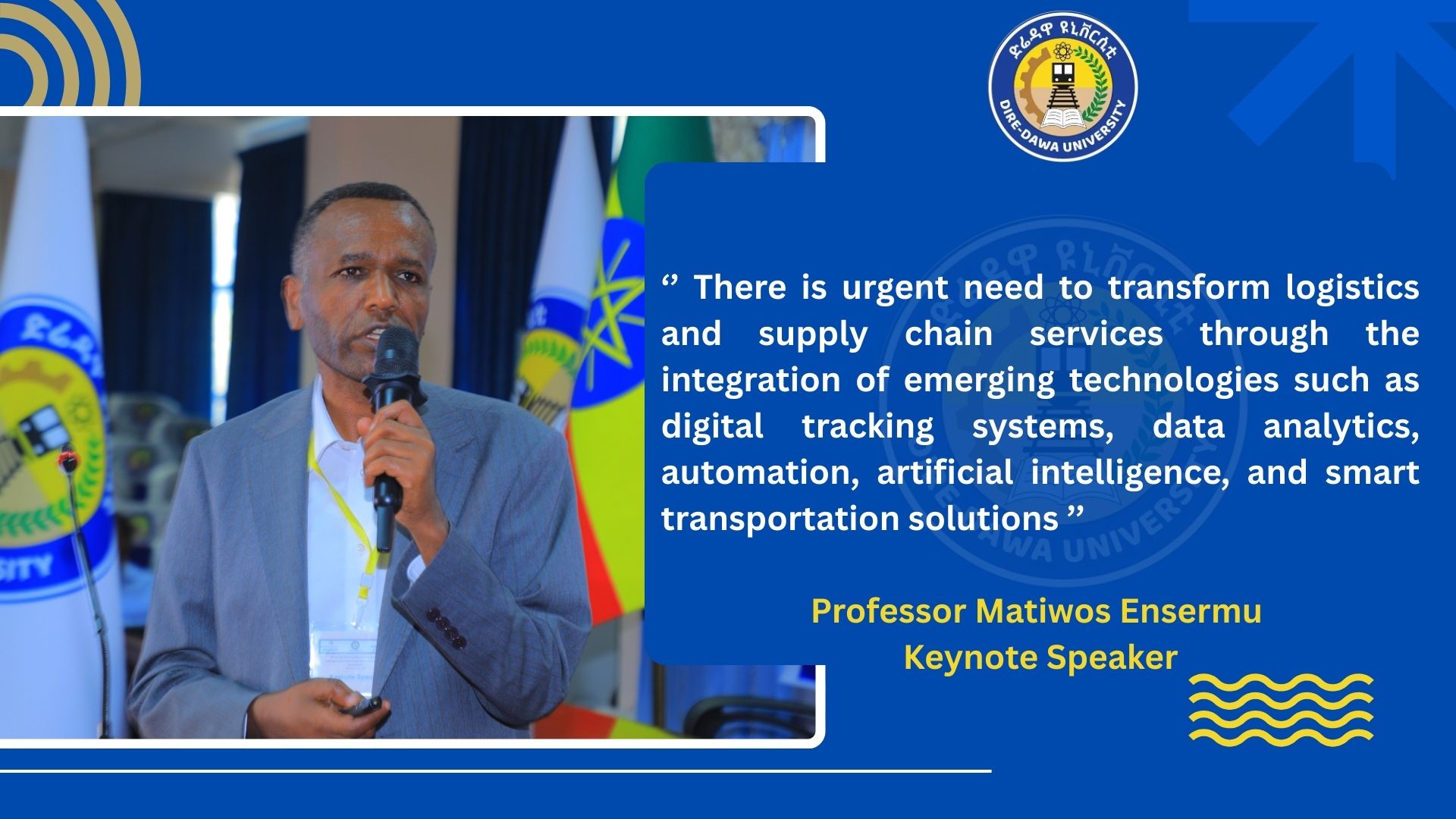
Professor Matiwos Ensermu, a reputable scholar and leading researcher in the area of logistic and supply chain sector, is here to deliver keynote speech at the 11th national research conference.
Professor Matiwos, usually referred as the
architect of national logistics, served at various national and international
organization including but not limited to;
Member of the Board of Directors for the Ethiopian
Shipping and Logistics Service Enterprise (ESLSE)
He was the Team Leader for the Ethiopian National
Logistics Strategy, a document that serves as the master blueprint for our
country's economic connectivity.
He serves as the President of the Ethiopian Logistics and
Supply Chain Management Professional Association and as Vice President for
Research for the Ethiopian Logistics Sectoral Association.
In his keynote speech entitled ''Bridging
theory and reality: the digital path to Inclusive prosperity'', Professor
Matiwos emphasized that transformation in logistics and supply chain management
plays a pivotal role in advancing the nation’s socio-economic development. He
noted that an efficient and modern logistics system is fundamental to enhancing
trade competitiveness, strengthening industrial productivity, and accelerating
overall economic growth.
He acknowledged the multifaceted efforts
currently underway to modernize the sector. However, Professor Matiwos stressed
that much more remains to be done. In particular, he underscored the urgent
need to transform logistics and supply chain services through the integration
of emerging technologies such as digital tracking systems, data analytics,
automation, artificial intelligence, and smart transportation solutions.
Professor Matiwos further highlighted that
higher education institutions must move beyond conventional teaching
approaches. Preparing students for the evolving demands of the sector requires
embedding technology-driven learning, practical industry exposure, innovation,
and research-based problem solving into academic programs. According to him,
leveraging emerging technologies and fostering an adaptive, future-oriented mindset
among graduates is critically important to realizing the progress Ethiopia
seeks to achieve.
The professor concluded his keynote by
affirming that the Digital Ethiopia 2030 initiative is anchored in collective
effort and shared responsibility, calling upon academia, industry,
policymakers, and the wider community to work collaboratively toward
sustainable national progress.



Share This News